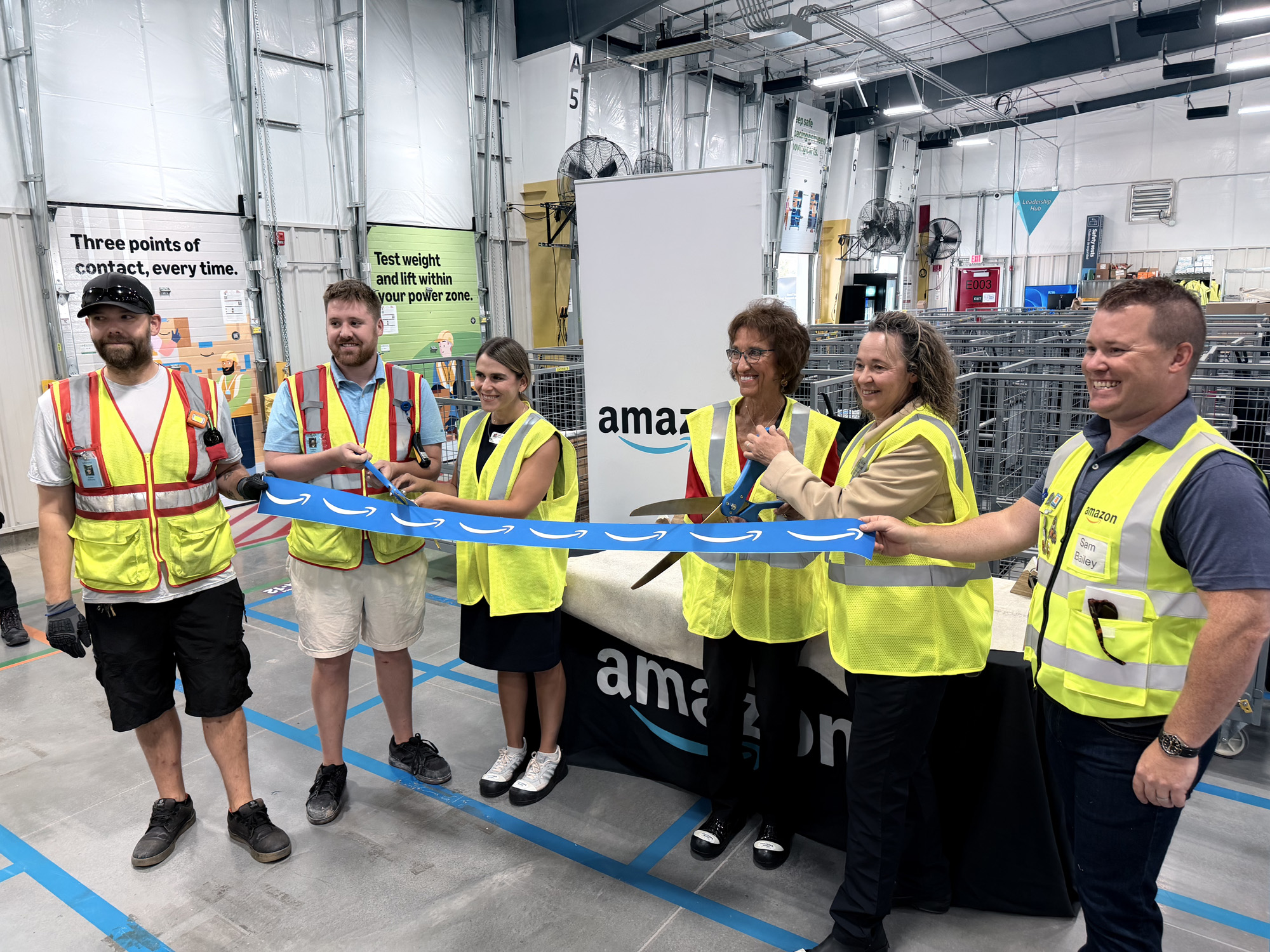
Amazon’s new Montrose delivery station is designed to take days off local delivery times while processing as many as 28,000 packages per week.
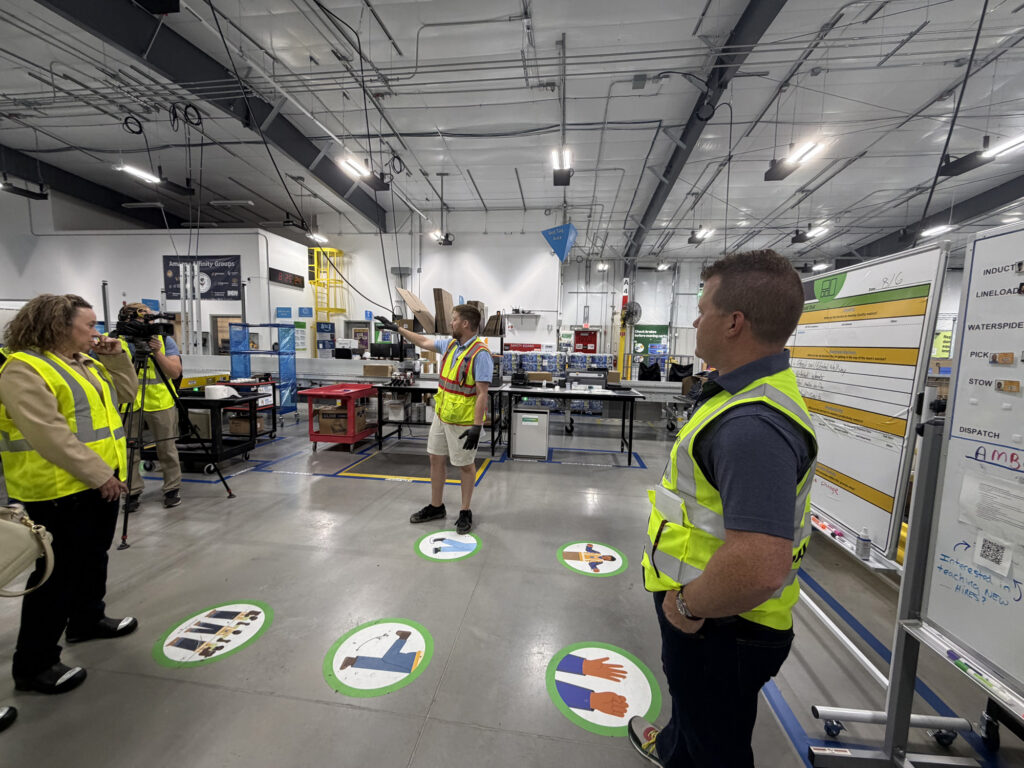
The company provided a behind-the-scenes look at the facility, located on County Road near the airport, Monday morning during a small tour and ribbon-cutting attended by members of the press, local economic-development officials and representatives from the Colorado Office of Economic Development and International Trade.
The $25 million project includes a 12,000-square-foot delivery station on approximately eight acres at 496 County Road, adjacent to Montrose Regional Airport. Amazon purchased the property from the Montrose Economic Development Corporation.
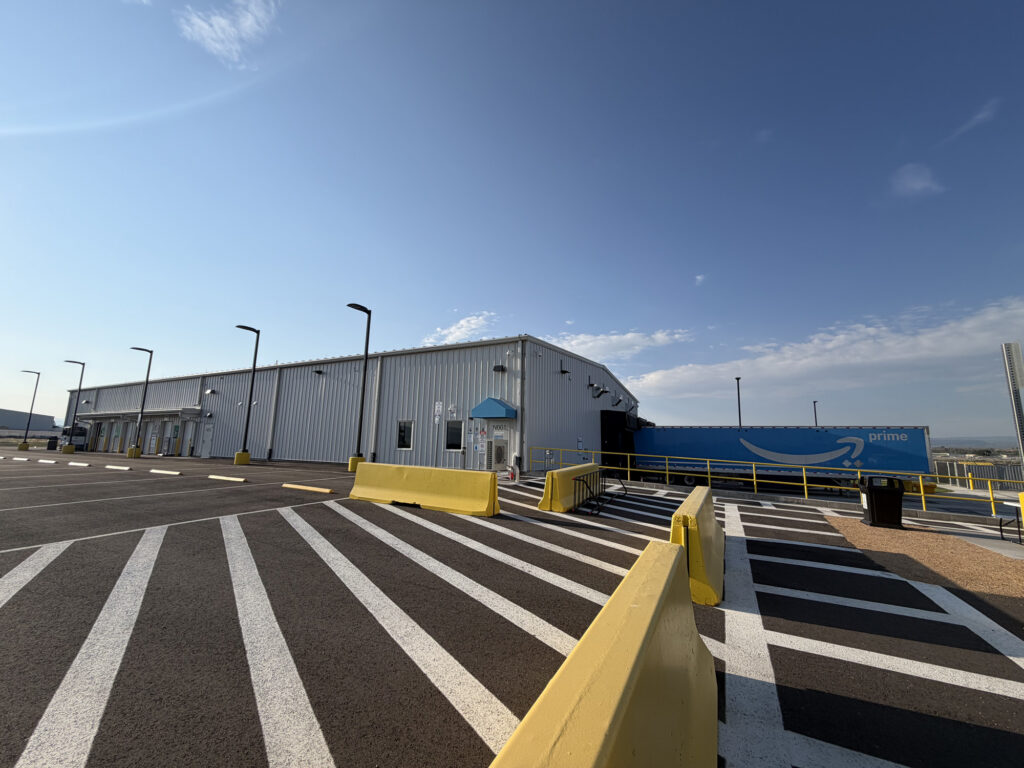
The facility is one of Amazon’s latest last-mile delivery station in Colorado and serves customers from the Montrose and Olathe areas south through Ridgway, Ouray and Placerville.
Sam Bailey, Amazon’s head of economic development in Colorado, said growing customer demand reached a point at which the company determined it needed a facility specifically serving the Montrose area.
“We start with customers and work backwards with everything,” Bailey said.
Amazon opened a delivery station in Grand Junction last year, but Bailey said continued growth created a concentration of customers around Montrose that justified another investment.
“It reached the point where we said we need to make that next investment, create the range that allows Grand Junction to be successful, and then create a station that allows this area to be successful,” Bailey said.
The Montrose Economic Development Corporation property aligned with Amazon’s needs because of its industrial setting and proximity to the airport, he said.
“This is a great highlight of EDC’s investment in themselves and their community,” Bailey said. “Primary employers show up; we spend a bunch of money.”
Bailey said Amazon did not receive local or state economic-development incentives for the project.
“We paid full freight,” he said. “We didn’t seek any economic-development incentives or assistance. It’s a $25 million investment for the land, the building and the infrastructure inside.”
From seven to 10 days down to two or three
Before the Montrose station opened, Amazon deliveries to the area typically took seven to 10 days, Bailey said. The local facility has reduced that window to approximately two to three days, with the company hoping to shorten it further.
“It allows us to control that volume in that network because we control the entire process from the customer order through coming out of the building and getting on the road,” Bailey said.
The facility is the final Amazon stop for most packages before they reach a customer.
During Monday’s tour, Bailey explained how an order moves through Amazon’s network. An item is first selected and packed at a fulfillment center. It then travels to a sortation center, where packages are divided according to the regions and delivery stations they will serve.
Packages bound for Montrose generally pass through Amazon’s Colorado Springs sortation center before arriving by truck at the local facility.
Bailey held up one package that originated at an Amazon fulfillment center in El Paso, Texas. After moving through the company’s network, it had reached Montrose and was scheduled to be delivered to its customer that day.
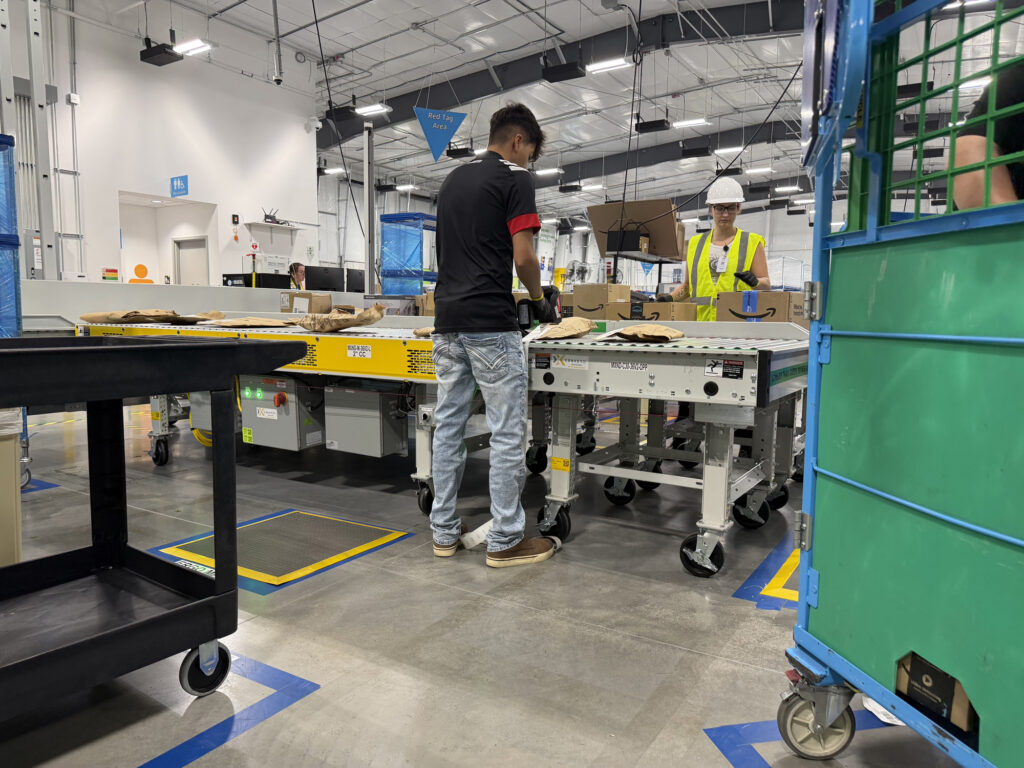
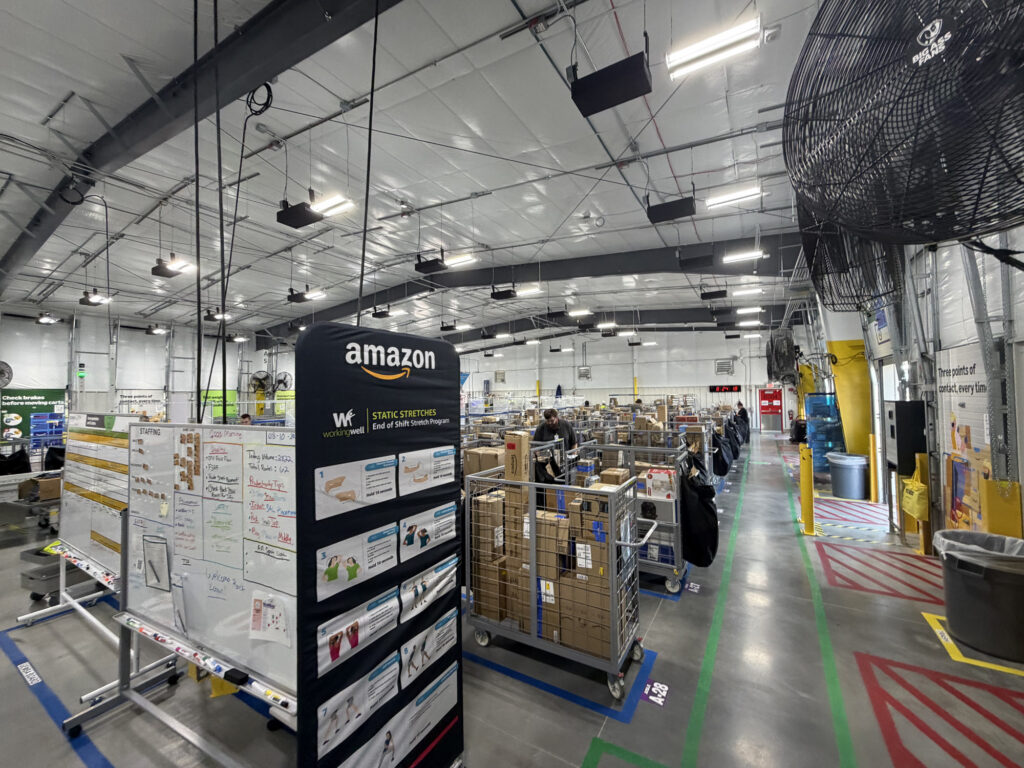
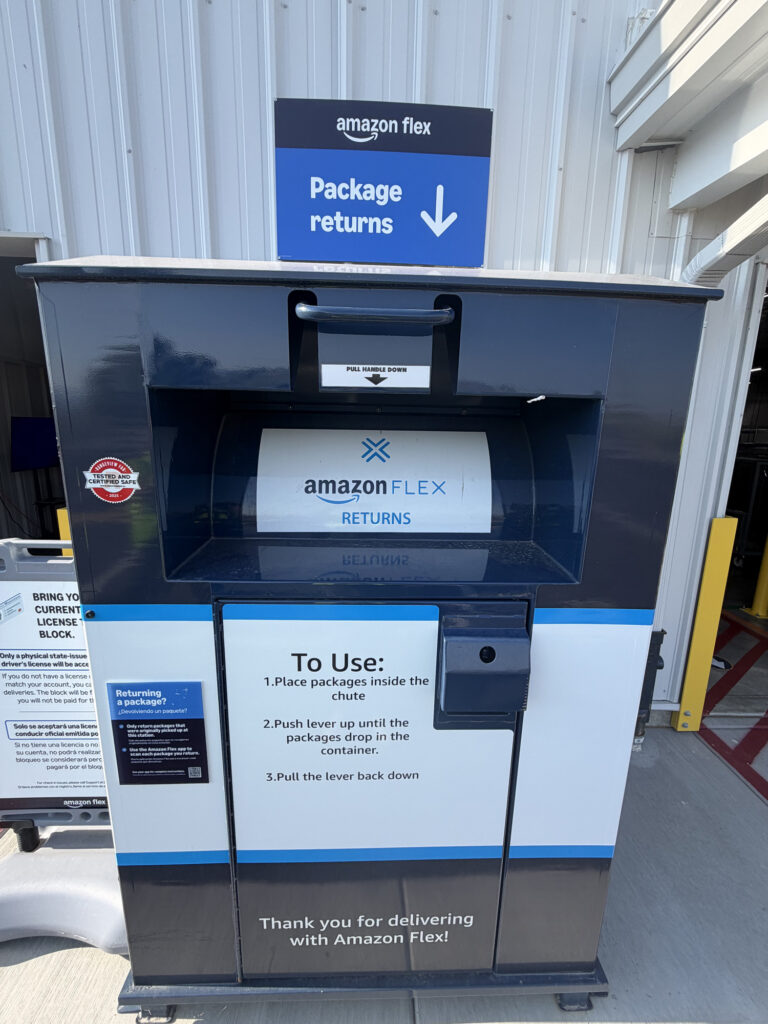
Once a truck arrives at the Montrose station, employees unload the packages and place them on a sorting line. Workers organize them by route and place them into bags or racks in the sequence drivers will need them.
Packages receive driver-aid numbers identifying the order in which they should be delivered. Drivers scan them with their phones as they load their vehicles, and Amazon’s software builds a mapped route directing them from one stop to the next.
“Trying to break it down, make it as easy as we can for our drivers,” Bailey said.
A typical route currently includes approximately 43 packages, according to Amazon.
The station plans to ramp up to a capacity of about 28,000 packages per week.
More than 50 employees, 75 Flex drivers
The Montrose facility currently employs more than 50 full- and part-time Amazon workers.
Site Leader Logan Lawler previously worked at an Amazon fulfillment center in Iowa before leaving the company for a position with a different company. He later returned to Amazon for the opportunity to join the leadership team at the new Montrose station.
“I love the goals here, the environment here, so I’m happy to come back to Amazon,” Lawler said.
The current workforce is expected to remain the station’s base staffing level. Amazon expects to add seasonal workers during its peak period, beginning around Thanksgiving and continuing through the holidays and early January.
The company hopes to convert seasonal workers into permanent employees when positions are available.
The station also works with more than 75 Amazon Flex drivers, who use their own vehicles to deliver packages. Flex drivers select available routes based on when and where they want to work rather than operating company-owned delivery vans.
Drivers arrive at the station after packages have been grouped and staged according to route length. They scan and load the packages into their vehicles, generally placing them in delivery order.
Amazon schedules the routes to leave after much of the morning work and school traffic has subsided.
“We want to make sure that we are a good neighbor,” Bailey said. “Our traffic from the site leaves after traffic has subsided in most areas.”
Bailey said the approach helps drivers reach customers efficiently while limiting conflicts with people commuting to work or taking children to school.
Most packages delivered through the facility remain within Amazon’s transportation network, but the company continues to use the U.S. Postal Service and other delivery partners when that is the most efficient option.
“The USPS is one of our fastest partners nationwide in delivering to customers,” Bailey said.
Built with room to grow
The Montrose property includes considerably more space than the 12,000-square-foot building itself, leaving room for vehicle staging and future increases in volume.
Bailey said Amazon designs its delivery stations based on projected customer demand in each market. Its Grand Junction facility is approximately 80,000 square feet, while a delivery station in Sterling is smaller than the Montrose operation.
Amazon also operates a delivery station in Gypsum and is constructing another in Hayden to serve northwestern Colorado.
“This site, while it is busy in there, can handle growth beyond what we’re forecasting,” Bailey said.
Package volume and staffing are expected to rise during the holiday season and around Amazon’s Prime shopping events.
“We always overbuild a little bit just so we have that capacity,” Bailey said. “Finding a great piece of property can be challenging, so when you get a property like this, we want to make sure we utilize it to its best advantages so that we can continue to scale as we grow.”
The company says it has invested more than $20 billion in Colorado since 2010 and employs more than 20,000 full- and part-time workers statewide. Amazon attributes another 20,000 indirect Colorado jobs to its construction, logistics, professional-service and supplier network.
Its Colorado footprint includes 11 fulfillment and sortation centers, 13 delivery stations, an Amazon Pharmacy, a Prime Now fulfillment center and 23 Whole Foods Market locations, according to company figures.
The company also says independent Colorado sellers moved more than 62 million items through Amazon in 2025, averaging $275,000 in sales per seller. Montrose-based Bluecorn Beeswax is among the local businesses that sell through the platform.
Airport rules out drone delivery
Although the station’s proximity to Montrose Regional Airport was advantageous for finding an industrial site, it makes the location unsuitable for Amazon’s drone-delivery program.
Bailey, who also oversees Amazon’s drone-delivery program in the United States, said the Federal Aviation Administration would not allow the company to operate delivery drones so close to commercial airport traffic.
Amazon drones generally operate between 200 and 400 feet above ground level and can deliver within about 7.5 miles of participating facilities, he said.
“This site, while it is a great site and drone delivery would be advantageous, it would conflict with standoffs with Montrose Airport,” Bailey said. “That airport’s a phenomenal economic generator, so we don’t want to get in their way. We want to operate safely.”
For Montrose customers, the company’s focus will remain on packages arriving by truck, being sorted locally and leaving in the vehicles of Flex drivers.
The result, Bailey said, is intended to give Western Slope customers an experience closer to what Amazon offers in the state’s larger population centers.
“Someone in the Denver area can have the same experience as someone in Montrose in terms of that quick delivery of their items,” he said.
Justin Tubbs is the Montrose Business Times editor. He can be reached by email at justin@montrosebusinesstimes.com or by phone at 970-765-0915 or mobile at 254-246-2260.