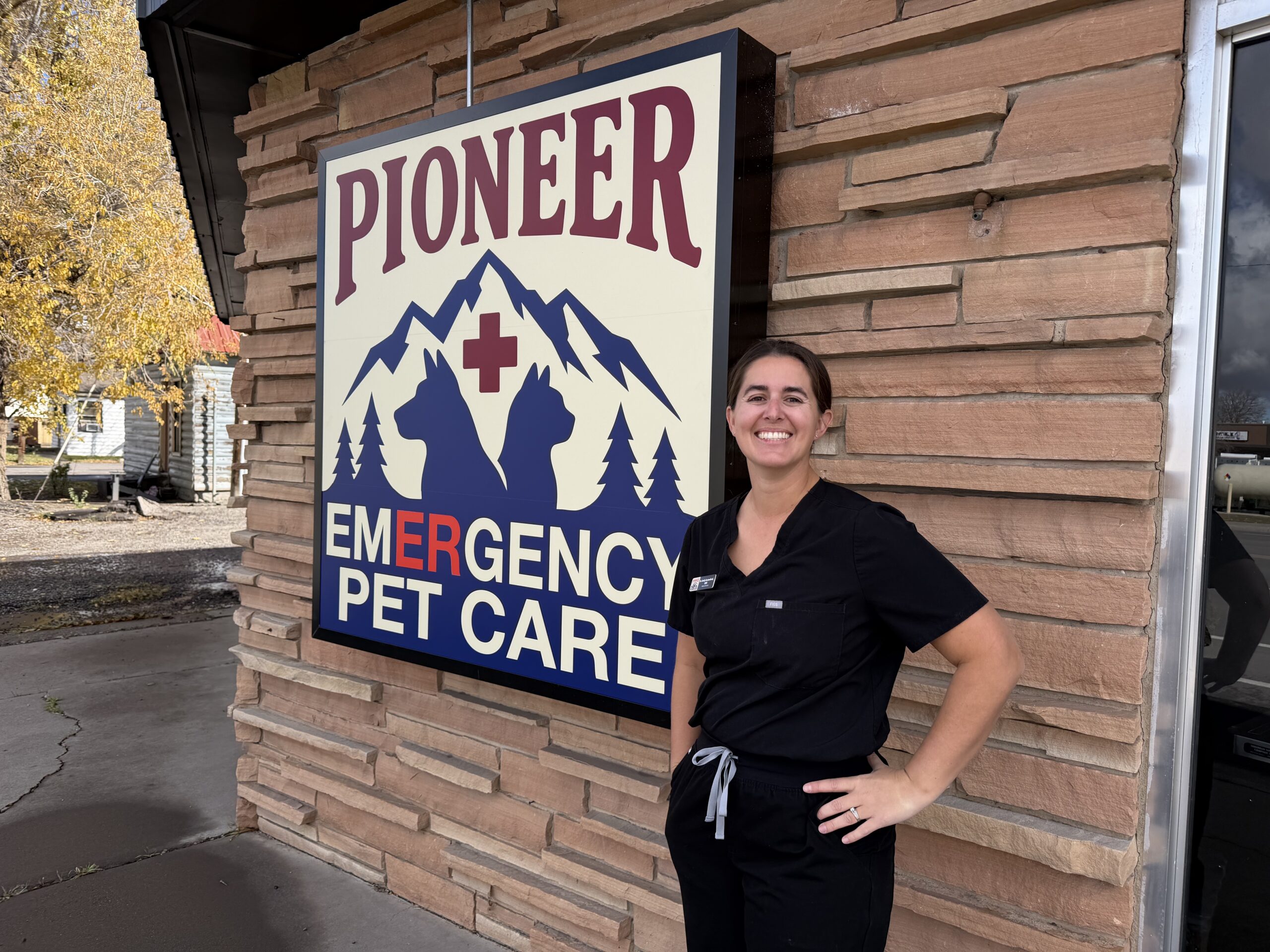
When Dr. Emily Kastendiek opened Pioneer Emergency Pet Care in June, she was fulfilling a longtime professional goal while addressing a need she had recognized for years in the community she calls home.
A 2011 Montrose High School graduate with years of experience in emergency veterinary medicine, Kastendiek wanted to give local pet owners another option when their animals needed immediate medical attention and their regular veterinarians were unavailable.
She had seen the need firsthand, both through her work as an emergency veterinarian and through conversations among local pet owners on social media.
Local veterinary practices, she said, have historically done their best to accommodate emergencies, often at the expense of their own schedules and staff.
“Local clinics, they try and get everyone in,” Kastendiek said. “But then they’re either going to be available 24/7 and burn themselves out, or their clients are angry because they’re not available 24/7.”
Pioneer represents something of a middle ground between a traditional veterinary practice and the larger, around-the-clock emergency hospitals typically found in urban areas.
The hospital is open from noon to midnight Friday through Sunday, with additional availability by appointment. Kastendiek designed the schedule around periods when emergency veterinary services are historically in high demand.
She is currently the hospital’s sole veterinarian. Her team includes Brittany Kuehn, a veterinary assistant who is working toward becoming a registered veterinary technician, and Dawn Oliver, a long-time registered veterinary technician.
Bringing emergency medicine home
Kastendiek moved to Montrose with her family in 2003. After graduating from high school, she attended Colorado State University, where she double-majored in agricultural business and animal science before earning her veterinary degree.
Though she initially envisioned a career in large-animal medicine, she developed a passion for emergency care.
She briefly practiced in Montrose after veterinary school before joining Grand Valley Veterinary Emergency Center in Clifton, where she eventually served as medical director for three years.
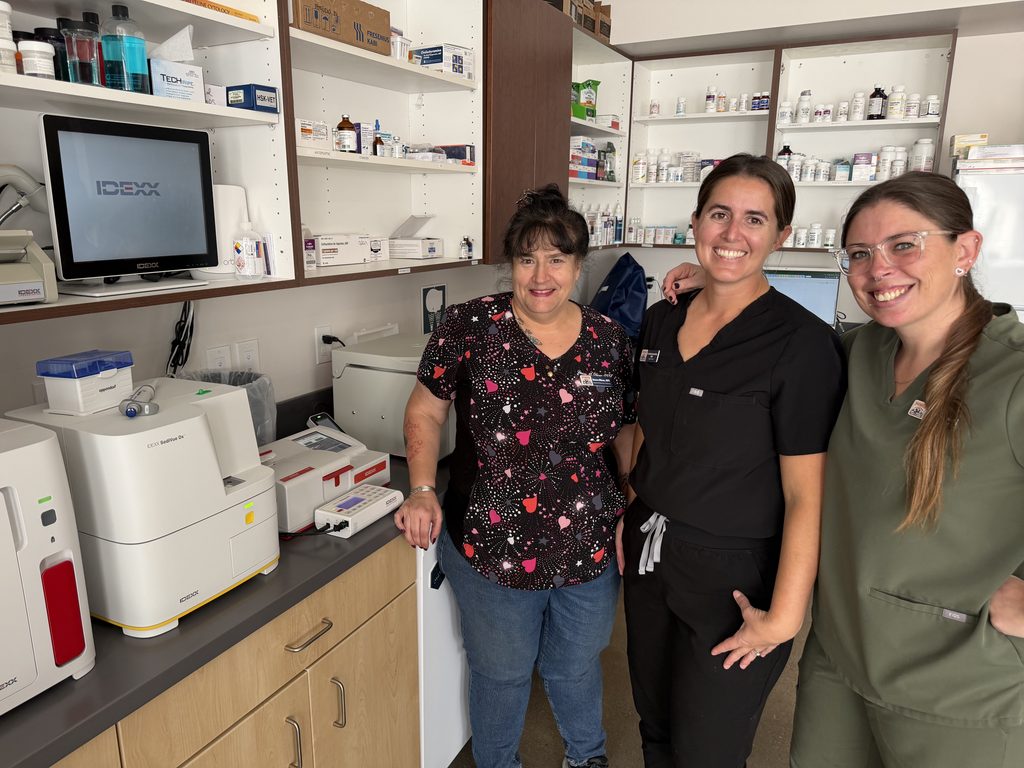
(Justin Tubbs | MBT)
Most recently, she spent about a year and a half traveling as a full-time emergency veterinarian with Veterinary Emergency Group, a company that operates 24-hour emergency hospitals primarily in metropolitan areas.
“I love emergency medicine because you don’t have a schedule to keep,” she said. “Whatever walks in the door is what you’re doing that day.”
Throughout much of her career, Kastendiek continued to call Montrose home. Owning her own practice was always a goal, but finding the right property and securing the financing necessary to establish an emergency hospital took time.
She had initially been under contract to purchase a much smaller building before discovering the former Classy Closet’s former space at 1012 E. Main St, which would eventually become Pioneer.
Kastendiek purchased the property in September 2025, and the buildout took about eight months.
“We literally tore out every single piece of drywall,” she said. “We went down to the studs.”
The project included removing interior walls, cutting into concrete to install new plumbing and outfitting the building with specialized medical equipment.
Kastendiek and her husband also spent three weekends salvaging cabinetry from a shuttered veterinary clinic in the Grand Junction area, storing it for approximately six months before installing it in their own hospital.
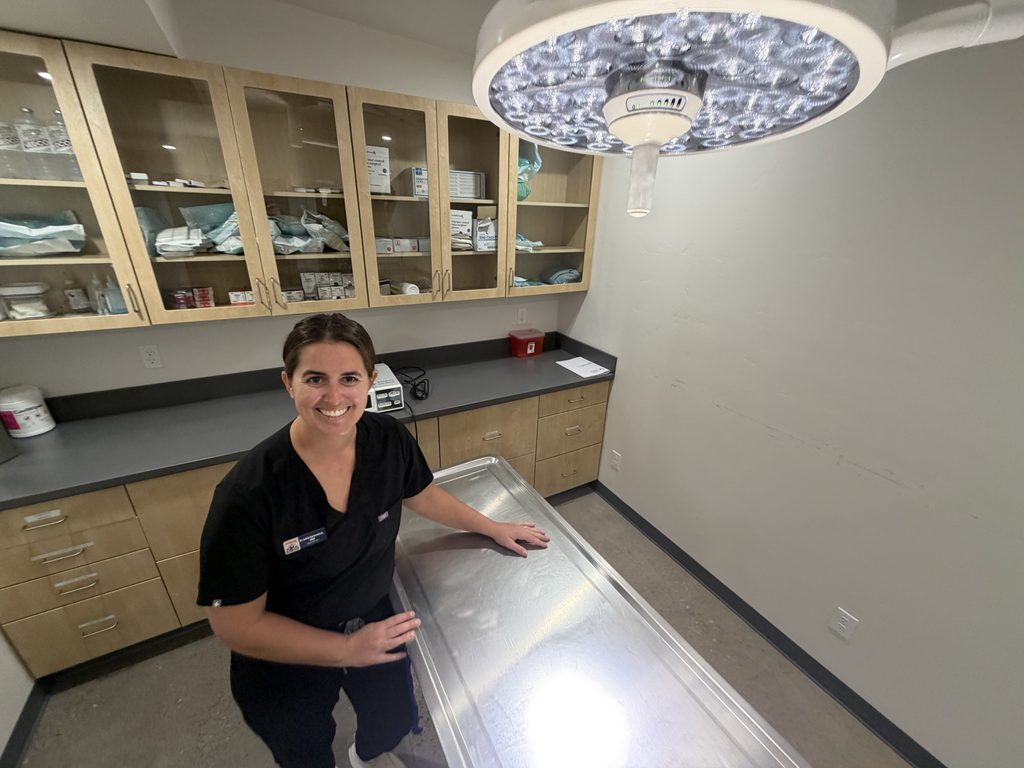
Today, Pioneer features an in-house laboratory and pharmacy, digital radiology, ultrasound, a surgical suite, treatment tables and space for short-term hospitalization.
Its services include emergency evaluation and stabilization, oxygen and fluid therapy, intensive monitoring, pain management, emergency surgery, wound and trauma care, treatment for poisoning and end-of-life care.
Keeping pets and their people together
One aspect of Kastendiek’s hospital was inspired by her time with Veterinary Emergency Group: an open-concept treatment area that allows pet owners to remain with their animals whenever possible.
Owners can accompany their pets into the treatment area and, when appropriate, be present as their animals recover from anesthesia following surgery.
Benches in the treatment area were purchased specifically with that purpose in mind.
In addition to improving the hospital’s workflow, Kastendiek said the design helps alleviate some anxiety associated with emergency veterinary visits.
“These are people’s children that we’re dealing with,” she said. “They can’t talk. People get anxious about it.”
The hospital also emphasizes communication about treatment options and costs. Patients undergo an initial triage examination to determine the severity of their condition, with life-threatening emergencies receiving priority.
From there, the team works with pet owners to develop treatment plans and discuss estimated costs.
Kastendiek said she has been encouraged by how understanding local pet owners have been about the costs of emergency medicine and the limitations of a small, independently operated hospital.
Because Pioneer does not have staff on-site around the clock, some patients still require transfers to other facilities for extended hospitalization or monitoring.
An unpredictable business
The first several months of business have shown Kastendiek the unpredictable nature of emergency medicine.
Some weekends, Kastendiek said, her entire team is on its feet throughout the day, barely finding time to sit down or eat lunch. Other weekends, the hospital might see only a handful of patients.
“It’s feast or famine,” she said.
And while dogs and cats make up much of the hospital’s clientele, Pioneer has already treated goats, a sheep and several exotic pets.
One of Kastendiek’s more memorable patients was a roughly 30-year-old tortoise whose owners traveled from Loma after the animal suffered a significant bite wound to its neck inflicted by its mate.
Though Kastendiek does not specialize in exotic animals, she agreed to see the tortoise and was able to surgically close the wound. A follow-up call indicated the animal was doing well.
Her willingness to treat a variety of animals comes with a relatively simple rule.
“If you can safely bring it into the building, I see it,” she said.
Community supporting community
Among the most meaningful experiences since opening, Kastendiek said, have been two unexpected donations to the hospital’s Angel Fund, which helps pet owners who cannot afford necessary veterinary care.
The first donation came from someone whose animals had never been treated at Pioneer. Having previously experienced a difficult situation involving emergency veterinary care, the donor was simply excited to see the hospital open in Montrose.
Another donation came from a client whose dog had received relatively minor treatment at the hospital.
The money has already helped other families, including in situations involving animals struck by vehicles, allowing owners to obtain additional diagnostic information and make more informed decisions about their pets’ care.
Kastendiek said the generosity was unexpected and moved her to tears.
She has also been encouraged by the developing relationships between Pioneer and other local veterinary practices.
Rather than competing with those practices, Kastendiek hopes Pioneer can serve as an extension of the local veterinary community, giving primary care veterinarians somewhere to refer patients when their schedules are full or their offices are closed.
Already, she said, some local practices have begun referring Friday emergencies to Pioneer rather than requiring their own staff to work late.
“I don’t want to take your clients,” Kastendiek said, describing the relationship she hopes to establish with other veterinarians. “You can trust me, and I practice good medicine.”
As demand grows, Kastendiek hopes to explore expanding the hospital’s availability, potentially beginning with additional on-call hours before determining whether the business can support another veterinarian.
For now, her focus is on establishing trust, providing consistent care and building a sustainable business in the community where she grew up.
“Practice ownership has always been the long-term goal,” she said. “Every day I learn something that I didn’t know before.”
Justin Tubbs is the Montrose Business Times editor. He can be reached by email at justin@montrosebusinesstimes.com or by phone at 970-765-0915 or mobile at 254-246-2260.