Montrose Business Times
The Gold Mountain Fire remains 87% contained at 39,718 acres as firefighters continue working pockets of lingering heat, while federal land managers have reopened some areas that had been closed for weeks because of the fire.
The Grand Mesa, Uncompahgre and Gunnison National Forests reduced its closure area this week, reopening access to several popular destinations, including Nellie Creek Road and Trailhead, Uncompahgre Peak, Wetterhorn Peak and Matterhorn Peak.
The Bureau of Land Management’s Uncompahgre Field Office has lifted its remaining emergency closure associated with the Gold Mountain Fire, while the BLM’s Gunnison Field Office has also reduced its closure area in Ouray and Hinsdale counties.
Significant closures remain, however, particularly in the Cimarron area and portions of the Uncompahgre National Forest affected by the Gold Mountain and neighboring Elk fires.
The Forest Service’s revised closure order took effect Aug. 24 and is scheduled to remain in place through Dec. 1 unless it is rescinded earlier.
Among the areas that remain closed are Silver Jack Reservoir-area recreation sites, Beaver Lake and Big Cimarron campgrounds, portions of Owl Creek Pass and the Cimarron forks, along with numerous Forest Service roads and trails.
Fire officials are urging residents, hunters and other visitors to check current closure maps before heading into the backcountry because areas immediately adjacent to reopened destinations may still be closed.
Much of the fire-affected area within Game Management Unit 65 also remains closed as hunting seasons approach. Colorado Parks and Wildlife is directing hunters with questions about access, licenses or refunds in GMUs 65 and 66 to its Gunnison office.
Meanwhile, 86 personnel remain assigned to the Gold Mountain Fire, down substantially from the hundreds of firefighters who worked the incident during its more active stages earlier this summer.
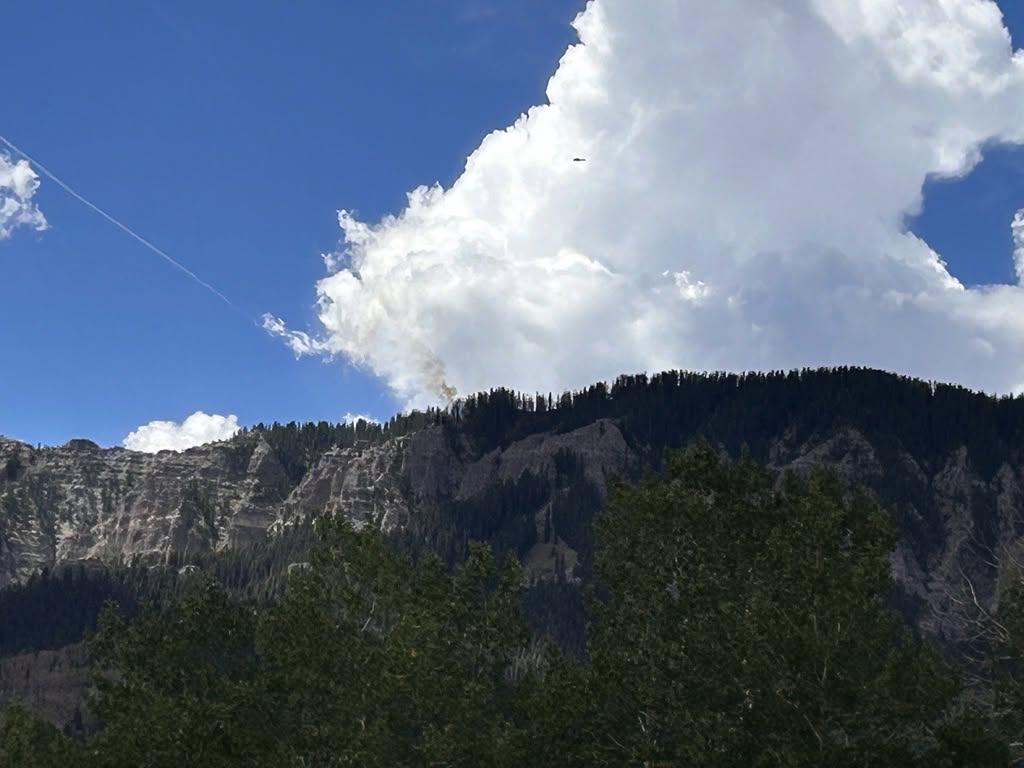
The fire started June 27 about 2 miles northeast of Ouray and grew rapidly through rugged terrain in the weeks that followed, at times producing heavy smoke across the region and prompting widespread road, trail and recreation closures.
Although recent rain, cooler temperatures and higher humidity have reduced fire behavior considerably, officials said the work of fully securing the fire continues.
Crews recently extended direct fireline along the east side of the Middle Fork, beginning where a previously installed hose lay ended. Firefighters also hiked into the East Fork area to investigate interior smoke, using hand tools and chainsaws to break apart larger fuels and extinguish remaining heat.
Fire managers planned to use an unmanned aircraft system, or drone, to search for additional heat outside the fire perimeter.
Fire activity is considered minimal, but officials said pockets of unburned vegetation and large fuels within the fire perimeter can continue to produce visible smoke.
Those heavy fuels are one reason work can continue long after a wildfire’s most dramatic activity has subsided.
Large logs, stumps and other woody material can retain heat for extended periods, even after substantial rainfall. The exterior of a log may be wet or appear completely burned while its interior continues to smolder.
Firefighters also continue to contend with “snags,” or standing dead trees, throughout the fire area.
Some snags were already dead because of insects, disease, drought or other causes before the Gold Mountain Fire began. Others were killed or weakened by the fire. Flames can damage trunks and root systems or burn away material supporting a tree, making it more likely to fall without warning.
That creates a particular hazard on the Gold Mountain Fire because crews are often working in steep, heavily timbered terrain while searching for remaining heat.
The hazards can compound one another. Firefighters may need to reach smoldering logs or other heavy fuels while working beneath weakened trees, while heat in those ground fuels can further damage tree roots and create additional snags. On steep slopes, burning logs can also roll downhill and potentially carry heat into unburned vegetation or across containment lines.
Officials said those conditions help explain why some areas remain closed despite the lack of an active flame front.
Crews continue to patrol the fire, mop up hot spots, improve fireline and use aircraft and unmanned systems to identify areas of concern while limiting firefighters’ exposure to hazardous terrain.
Daily thunderstorms were expected through midweek, bringing the possibility of gusty outflow winds. A gradual warming and drying trend is forecast later in the week.
The Gold Mountain Fire’s cause remains undetermined.
A temporary flight restriction also remains in effect over the Gold Mountain and Elk fire areas. Members of the public are prohibited from flying drones near the fires because unauthorized aircraft can force firefighting aircraft to suspend operations.